




ENG
HOMEConnector InformationWhat Are Electronic Connectors?

  • What Are Electronic Connectors?

  • 2026-07-17

The first true electronic systems used manually fastened wires, screw terminals, or exposed contact points to complete circuits. However, as technology became more advanced during the Industrial Revolution and the rise of telecommunications, engineers realized electrical systems needed faster, safer, and more modular ways to connect and disconnect components. This demand ultimately led to the development of electronic connectors as we recognize them today. Electronic connectors are the physical interfaces allowing electricity, signals, and data to travel between devices, systems, and components without requiring a permanent electrical bond.  

Connectors evolved from simple plugs used in telegraphy and telephone switchboards into highly engineered interconnect systems supporting everything from aerospace navigation and medical imaging to AI servers and electric vehicles. Modern electronic connectors now handle staggering levels of speed, power, miniaturization, and environmental durability, quietly serving as the nervous system of nearly every electronic device on Earth.

Origins of the First Electronic Connector 

The earliest recognizable electronic connector is widely considered to be the telephone plug and jack system developed during the late 19th century alongside manual telephone switchboards. One of the first commercially significant examples emerged in the 1870s after Alexander Graham Bell’s telephone invention created an urgent need for interchangeable electrical connections between communication devices and operator switchboards. 

Before connectors existed, wires were often soldered directly into systems, making maintenance slow, dangerous, and impractical. Telephone plugs solved this problem by allowing operators to manually route calls using removable conductive plugs inserted into matching jacks. These primitive connectors revolutionized communication infrastructure because they enabled rapid signal routing, modular repairs, and scalable network expansion. 

By the early 20th century, connector technology spread into radios, military communications, industrial machinery, and eventually consumer electronics. What began as a simple need to connect one voice signal to another ultimately laid the foundation for the interconnected technological world that exists today

Evolution of Electronic Connectors

Once the first connectors proved successful in telecommunications, innovation accelerated rapidly throughout the 20th century. Military demands during World War I and World War II forced manufacturers to develop more rugged and reliable connectors capable of surviving vibration, moisture, corrosion, and temperature extremes. Aviation systems, radar equipment, and early computing devices required increasingly specialized interconnect solutions. By the 1940s and 1950s, electronic connectors became mission-critical infrastructure supporting national defense, industrial automation, and scientific advancement.

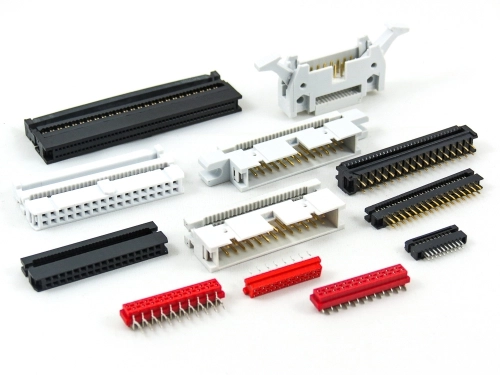
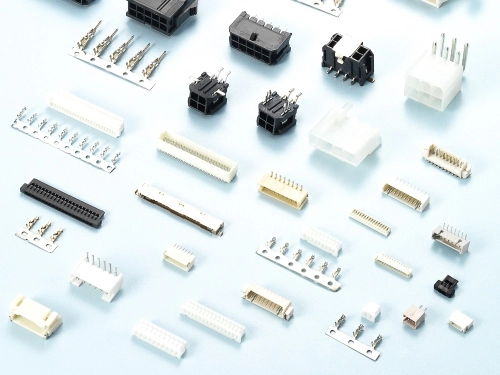
As electronics continued shrinking during the semiconductor revolution of the 1960s and 1970s, connector technology evolved alongside integrated circuits and printed circuit boards (PCBs). Engineers developed board-to-board connectors, ribbon cable connectors, edge card connectors, and pin headers to support modular electronics and mass manufacturing. Consumer electronics during the 1980s and 1990s fueled the rise of USB connectors, DIN connectors, audio/video connectors, and computer interconnect standards. Suddenly, connectors needed to support not only power transmission but also increasingly complex digital signal integrity requirements, leading to the engineering standardization of gold plating, shielding techniques, precision molding, and high-density contact designs.

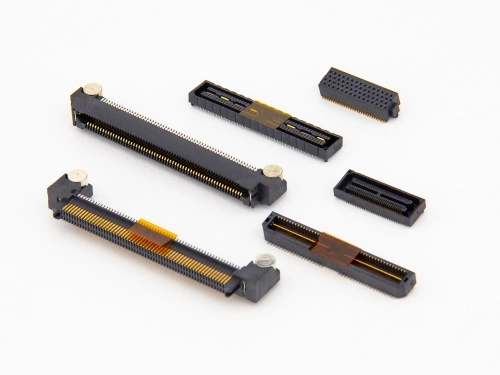
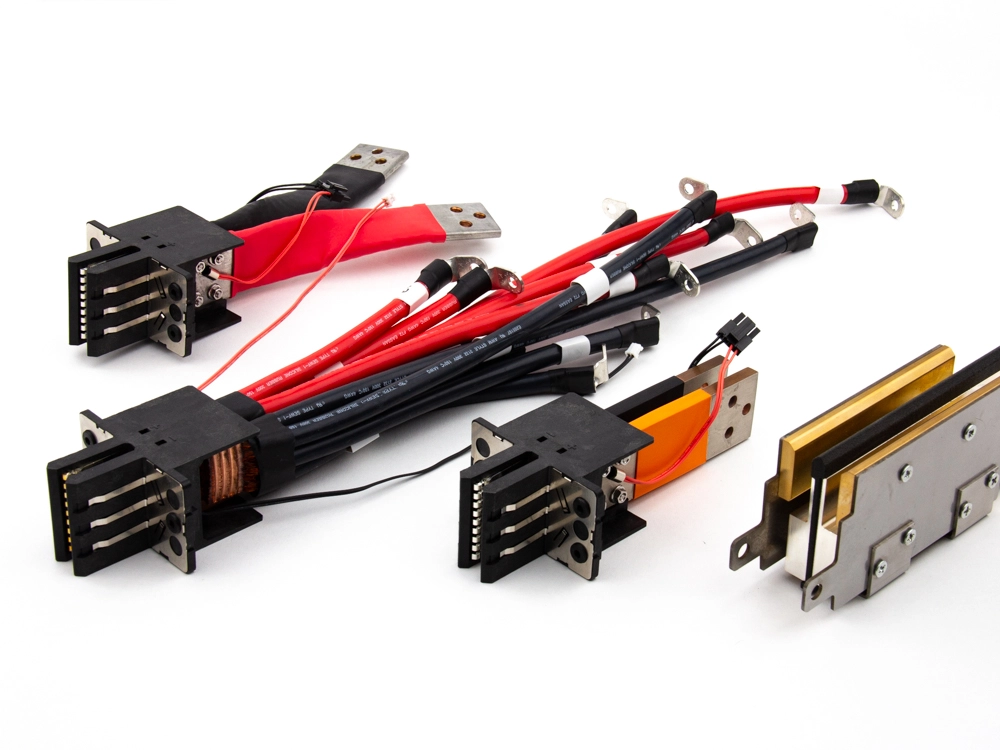
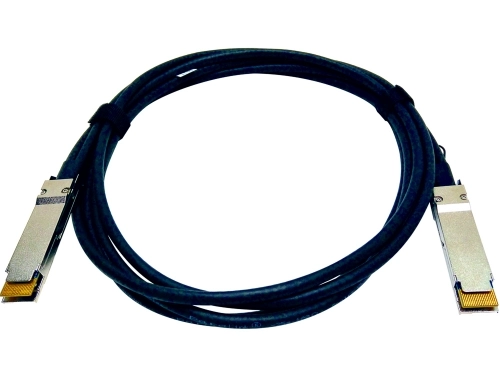
Today, connector evolution is primarily driven by high-speed data transmission, high-current power delivery, miniaturization, and environmental resilience. Modern AI servers, cloud infrastructure, autonomous vehicles, aerospace systems, and telecommunications equipment require connectors capable of supporting data rates exceeding 112Gbps PAM4 signaling while simultaneously managing thermal loads and electromagnetic interference. High-power connectors routinely handle hundreds of amps for EV charging systems, data center power shelves, and industrial equipment. Additionally, waterproof USB Type-C connectors, fine-pitch mezzanine connectors, and high-density board-to-board connectors continue shrinking while becoming more durable and electrically sophisticated. The connector industry has transformed from simple conductive hardware into a field combining mechanical engineering, materials science, thermal management, and signal integrity optimization.

Where to Find Electronic Connectors?

Electronic connectors can be found virtually everywhere modern electricity and data exist, from smartphones, medical equipment, industrial robots, and aircraft systems to household appliances and cloud computing infrastructure. However, sourcing high-quality connectors requires far more than locating the lowest-cost supplier. Engineers should evaluate manufacturers based on signal integrity performance, current ratings, material composition, plating quality, mechanical durability, environmental certifications, and testing standards. Reliable manufacturers also provide detailed technical documentation, 3D CAD models, compliance certifications, and transparent electrical specifications. Additional considerations include mating cycle ratings, thermal resistance, EMI shielding performance, waterproofing capabilities, and tolerance consistency across production runs. In high-reliability industries such as aerospace, telecommunications, automotive, and medical technology, even microscopic manufacturing deviations can result in catastrophic failures. This is why experienced engineers prioritize manufacturers capable of combining precision engineering with scalable production and long-term reliability support.

The Cost of Electronic Connectors

Electronic connector pricing varies dramatically depending on connector type, materials, pitch size, current rating, environmental protection, and signal performance requirements. Basic PCB pin headers may only cost a few cents per unit when ordered in bulk quantities, while waterproof USB Type-C connectors often range between $0.50 and $5 depending on specifications and durability requirements. Meanwhile, high-speed mezzanine connectors supporting advanced server architectures can cost $20 to $100 per connector because of the precision engineering required for high-frequency signal transmission. 

Despite these minute differences, there are several universal criteria influencing nearly every connector’s price: contact plating thickness, conductor material quality, insertion cycle durability, thermal resistance, environmental sealing, manufacturing tolerances, and compliance testing. Gold-plated contacts, for example, also significantly improve corrosion resistance and signal reliability but increase manufacturing costs. Similarly, connectors designed for high-speed applications require tighter impedance control and shielding designs, increasing engineering complexity. Ultimately, connector cost reflects far more than raw materials; it represents the reliability, longevity, safety, and electrical performance engineered into the final product.

Finding the Best Electronic Connector Manufacturers 

Finding a reputable electronic connector manufacturer is significantly more difficult than simply locating a supplier offering low prices or broad catalogs. The connector industry demands deep expertise in mechanical engineering, metallurgy, thermal performance, signal integrity, manufacturing precision, and international compliance standards. Many manufacturers can produce connectors, but far fewer can consistently deliver high-performance solutions capable of surviving real-world operating conditions over long service lifespans. This is where Oupiin Enterprise has established its reputation. 

We continue to advance connector technology through solutions supporting USB connectivity, mezzanine architectures, board-to-board systems, waterproof interconnects, and hyperscale computing applications. In an industry built upon reliability, precision, and performance, trusted manufacturers do not simply sell connectors; they help shape the infrastructure powering the modern world. Contact us to learn more. You can also call our Valencia, California, USA office (+1(800) 820-7446) or our headquarters in Taoyuan City, Taiwan (+886-3-3655030). We are ecstatic to collaborate and create a product reaching its maximum potential.


202502211359388tpM   20250221140032bqsM   20250221140042bUxX